

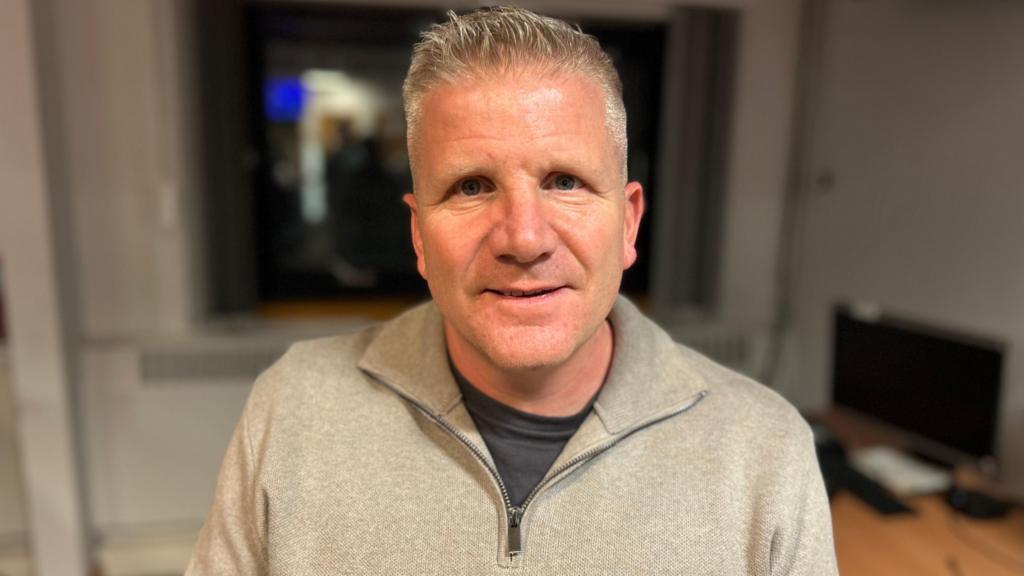
The Northern Ireland Commissioner for Children and Young People has warned that increases in school meal prices will “acutely” impact children from low-income families who are not eligible for free school dinners.
Commissioner Chris Quinn has urged a “fundamental rethink” of the current system.
The price of school meals increased in January, marking the first rise since 2017.
The Education Authority (EA) has reported a £300m funding shortfall and stated that, unlike previous years, it does not anticipate receiving additional in-year funding to address this deficit.
Under the EA’s announced savings plans, the cost of a school dinner for primary and special school pupils has risen by 50p, from £2.60 to £3.10.
Post-primary pupils are facing a 19% price increase on food purchased from school canteens, with pre-school prices also set to rise.
Pupils receiving free school meals will not be affected by these price increases, which took effect on January 1, 2026.
Mr. Quinn has advocated for the provision of “universal free school meals” for all children in Northern Ireland.
He noted the significant rise in food inflation, stating that it is “going through the roof”.
“We have many children from low-income families, and the current system requires a radical rethink,” he stated.
“The cost increase will likely not resolve the underlying issues and could have a substantially negative impact on children’s education, health, and overall well-being.”
Mr. Quinn added, “The reality is that too many children are attending school hungry, and far too many are missing out on free school meals.”
He also highlighted the significant increase in the cost of living and its impact on working families.
“Families with multiple children in school will likely need to reassess their budgets. I believe we need to address this issue from a different perspective.”
Sue McDonnell, a parent of three, emphasized the rising cost of living, stating that “everything is going up.”
“I actively shop around for everything,” she added.
“I will need to carefully calculate how much I can realistically afford for school dinners each week.”
“I’m questioning whether I can afford to provide a hot school meal three days a week, or if I will need to reduce it to two.”
She also mentioned that batch cooking meals is “quite handy” for school lunches.
She questioned the rationale behind implementing such a significant price increase all at once.
“There hasn’t been a price increase in the last few years, and a gradual increase would have been less noticeable.”
“This is a substantial amount of money to implement at one time.”
Glen Cawley, a self-employed individual, told BBC News NI:
“I firmly believe that the government should ensure every child receives at least one free meal a day, regardless of their parents’ employment status.”
“Working individuals are also facing financial hardship.”
In December, trade unions participated in a protest against the increase in school dinner prices and other savings plans announced by the EA.
Approximately 210,000 school meals are consumed daily, with around 90,000 pupils eligible for free school meals.
The EA stated that the cost of a school dinner had not increased since 2017/18, while inflation had risen by approximately 35% during that period.
They reported that each school meal costs an average of £4.28 to produce.
The EA has reported a £300m funding shortfall and stated that, unlike in previous years, it does not anticipate receiving additional in-year funding to address this deficit.
The authority had previously instructed school principals to limit new staff appointments and reduce the use of substitute teachers as cost-saving measures.
However, these new savings measures will directly affect families and the expenses they incur at school.
Higham Lane School, part of Central England Academy Trust, said it will stay shut until Wednesday.
The Robert Burns Academy and its supported learning centre in Cumnock will not re-open until Monday 12 January
Icy conditions across the island leads to widespread travel disruption and the closure of schools.
Gareth Wilson has replaced William Irwin who announced in December that he was stepping down from Stormont after 20 years in elected politics.
A signed summary of BBC Newsline.