

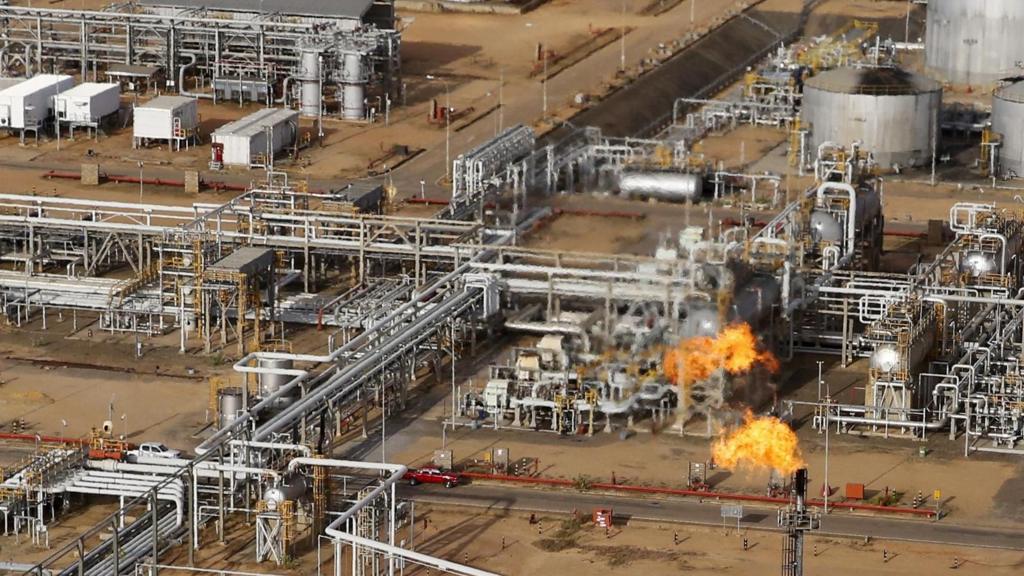
Donald Trump has pledged to exploit Venezuela’s oil reserves following the capture of President Nicolás Maduro, stating the US will “run” the country until a ‘safe’ transition is achieved.
The former US president aims to have American oil companies invest billions in the South American nation, which possesses the world’s largest crude oil reserves, to develop the largely untapped resource.
He asserted that US firms would repair Venezuela’s “badly broken” oil infrastructure and “start making money for the country”.
However, experts caution that Trump’s plan faces considerable hurdles, estimating that it would require billions of dollars and up to a decade to significantly increase oil output.
The central question remains: Can the US truly take control of Venezuela’s oil reserves? And is Trump’s plan viable?
With approximately 303 billion barrels, Venezuela holds the world’s largest proven oil reserves.
However, the country’s current oil production is comparatively low.
Production has declined sharply since the early 2000s, as former President Hugo Chavez and the subsequent Maduro administration tightened control over the state-run oil company, PDVSA, leading to a loss of experienced personnel.
While some Western oil firms, including US-based Chevron, remain active in the country, their operations have been scaled back as the US has expanded sanctions targeting oil exports, seeking to limit Maduro’s access to a crucial economic lifeline.
Sanctions, initially imposed by the US in 2015 during President Barack Obama’s administration over alleged human rights violations, have largely isolated the country from investment and essential equipment.
“The real challenge they’ve got is their infrastructure,” says Callum Macpherson, head of commodities at Investec.
In November, Venezuela produced an estimated 860,000 barrels per day, according to the latest oil market report from the International Energy Agency.
This is roughly a third of its production a decade ago and accounts for less than 1% of global oil consumption.
Venezuela’s oil reserves consist of “heavy, sour” crude, which is more difficult to refine but suitable for producing diesel and asphalt. In contrast, the US typically produces “light, sweet” crude used for gasoline production.
Leading up to the strikes and capture of Maduro, the US also seized two oil tankers off the coast of Venezuela and ordered a blockade of sanctioned tankers entering and leaving the country.
Homayoun Falakshahi, senior commodity analyst at data platform Kpler, states that the primary obstacles for oil companies seeking to exploit Venezuelan reserves are legal and political.
Speaking to the BBC, he explained that any entity looking to drill in Venezuela would require an agreement with the government, which is unlikely until Maduro’s successor is in place.
Companies would then be risking billions in investment on the stability of a future Venezuelan government, Mr. Falakshahi added.
“Even if the political situation is stable, it’s a process that takes months,” he said. Companies hoping to take advantage of Trump’s plan would need to sign contracts with the new government when it is in place, before beginning the process of ramping up investment in infrastructure in Venezuela.
Analysts have also cautioned that restoring Venezuela’s former output could require tens of billions of dollars and potentially a decade.
Neil Shearing, group chief economist at Capital Economics, suggested that Trump’s plans would have a limited impact on the global supply, and therefore price, of oil.
He told the BBC that there are “an enormous number of hurdles to overcome and the timeframe of what is going to happen is so long” that oil prices in 2026 would likely see little change.
Mr. Shearing said firms would not invest until a stable government is in place in Venezuela, and the projects would not deliver for “many, many years”.
“The issue has always been decades of underinvestment, mismanagement and it is really expensive to extract,” he said.
He added that even if the country could return to previous production levels of around three million barrels per day, it would still be outside the world’s top 10 producers.
Mr. Shearing also pointed to high production among OPEC+ countries, stating that the world is currently “not suffering from a shortage of oil”.
Chevron is the only American oil producer still operating in Venezuela, having received a license under former President Joe Biden in 2022 to continue operations despite US sanctions.
The company, which currently accounts for around a fifth of Venezuelan oil extraction, has stated that it is focused on the safety of its employees and is complying “with all relevant laws and regulations”.
Other major oil firms have remained publicly silent on the plans so far, with only Chevron addressing the situation.
However, Mr. Falakshahi said that oil executives will be in internal discussions about whether to capitalize on the opportunity.
He added: “The appetite to go somewhere is linked to two main factors, the political situation and the resources on the ground.”
Despite the highly uncertain political situation, Mr. Falakshahi suggested that “the potential prize may be deemed too big to avoid”.
Mette Frederiksen said the “US has no right to annex any of the three nations in the Danish kingdom”.
Analysis Editor Ros Atkins looks at the key questions following US strikes on Venezuela and seizure of its president.
Trump seems to believe he makes the rules and others cannot have the same privileges.
Celebrations have swept across Florida’s Doral, even as questions linger over Venezuela’s future.
Stephen Schwartz says he will not appear at the arts venue as it “has now become an ideological statement”.