

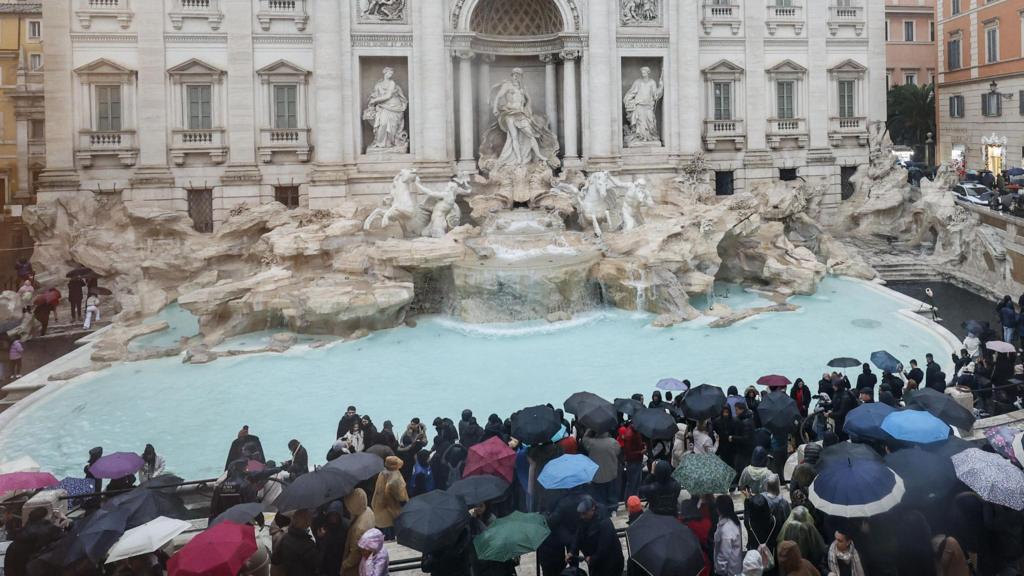
Visitors to Rome’s iconic Trevi Fountain will soon face a €2 (approximately £1.75 or $2.34) entrance fee for closer access to the monument.
The new measure, creating a barrier for viewing the famed Baroque landmark, is slated to take effect on February 1, 2026.
While coins tossed into the fountain are traditionally donated to charity, revenue from the entrance fee will be allocated to the city authority for maintenance and visitor management. The city anticipates generating €6.5 million annually from the Trevi Fountain alone.
Rome’s Mayor Roberto Gualtieri, announcing the initiative Friday, stated via Reuters that “two euros isn’t very much … and it will lead to less chaotic tourist flows.”
The Trevi Fountain levy forms part of a broader new tariff system impacting various museums and monuments across the Italian capital.
Several sites currently requiring admission fees will become free for Rome residents, including the Sacred Area of Largo Argentina.
Conversely, tourists and non-residents will be required to pay for access to the Trevi Fountain and five other attractions, such as the Napoleonic Museum.
Exemptions from the fees will be granted to children under five years of age, as well as individuals with disabilities and one accompanying person.
Visitors will still be able to view the Trevi Fountain – designed by Italian architect Nicola Salvi in the 18th Century – without charge from a distance.
The site currently attracts an average of 30,000 visitors each day, according to the City of Rome.
Following restoration work completed last year, Mayor Gualtieri implemented a queuing system to mitigate overcrowding around the popular landmark.
Access is currently capped at 400 individuals at any given time.
Guernsey officials said discussions for services to Guernsey were still ongoing.
A developer wants to convert the former Royal Northern Infirmary into a 45-bedroom hotel.
The study said more than 50m visitor trips were made to East and West Sussex throughout the year.
The footprints date back some 210 million years and show traces of toes and claws.
The government has been cracking down on the rentals firm as neighbourhoods protest against holiday lets.