

“`html
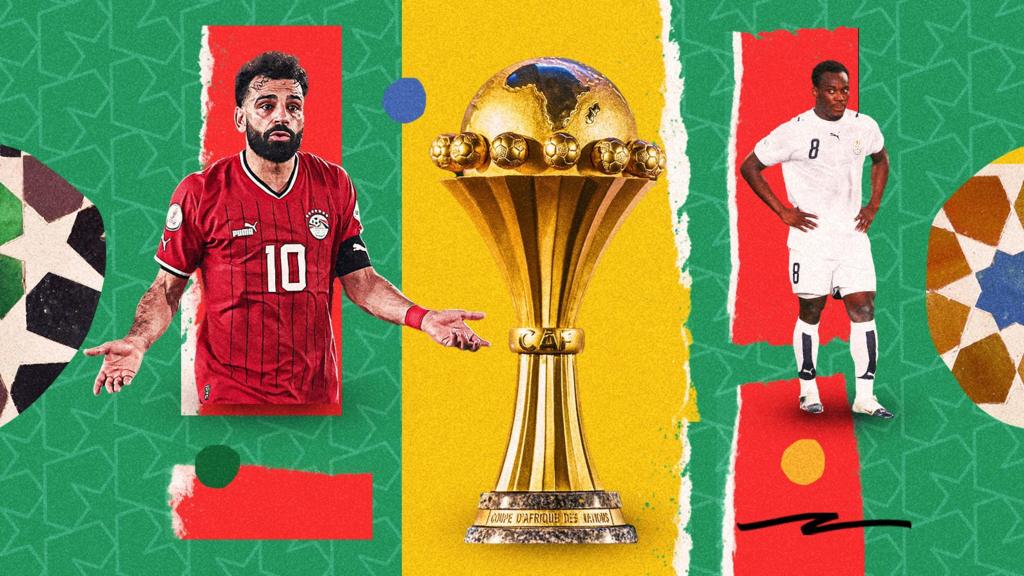
Mohamed Salah is set to embark on his fifth campaign to secure the Africa Cup of Nations title with Egypt, joining a list that includes Michael Essien among other modern greats who have missed out on the coveted trophy.
While Mohamed Salah’s future with Liverpool may be uncertain, his accomplishments at Anfield remain undeniable.
The Egyptian star has amassed an impressive collection of silverware during his tenure with the Reds; however, the Africa Cup of Nations (Afcon) title has eluded him.
As Salah aims to change his fortunes at the upcoming 2025 finals in Morocco, he joins the ranks of several other African football legends who never managed to clinch the continental trophy.
BBC Sport Africa profiles five prominent figures who were unable to secure Africa’s premier prize.
Mohamed Salah has twice finished as a runner-up at Afcon, most recently in the 2021 edition against Senegal in Cameroon.
At 33, is this the defining moment for Egypt’s captain?
The Pharaohs boast a record seven titles, making them the tournament’s most successful nation.
However, their last triumph was in 2010, marking the beginning of a drought that has coincided with Salah’s international career, which began in 2011.
Notably, Egypt failed to qualify for the 2012, 2013, and 2015 Afcons, with Salah’s first appearance occurring in 2017 when the North Africans suffered a defeat to Cameroon in the final.
Salah, crowned African footballer of the year in 2017 and 2018, faced further disappointment on home soil during Afcon 2019, where Egypt was stunned by South Africa in the round of 16.
Egypt reached the final again in the 2021 edition, only for Salah to be defeated by his then Liverpool teammate Sadio Mane in a penalty shootout.
Salah was designated to take the decisive fifth penalty, but never got the chance as Senegal secured a flawless 4-2 victory.
An injury during the group stage of the 2023 Afcon sidelined Salah, who now ranks second among Egypt’s all-time top goalscorers, forcing him to watch as DR Congo eliminated his team in the second round.
All you need to know about Afcon 2025
Six players to watch at Afcon 2025
Didier Drogba (left) missed a crucial penalty in regular time as Ivory Coast suffered an unexpected defeat against Zambia in the 2012 Afcon final.
Drogba consistently rose to the occasion for Chelsea, scoring nine goals in 10 major finals and ultimately winning eight of those matches.
However, the striker’s clinical edge faltered when he captained Ivory Coast in two Afcon finals, with penalties proving to be his downfall.
In 2006, the Elephants faced a penalty shootout against hosts Egypt, but Drogba’s opening attempt was saved, and the Pharaohs emerged victorious with a 4-2 win.
The West Africans returned to the final in 2012 as strong favorites against Zambia, but Drogba’s struggles from the penalty spot resurfaced.
With 10 minutes remaining, he squandered an opportunity to give the Ivorians the lead, sending his penalty high over the bar.
Drogba converted his penalty in the subsequent shootout, but his team suffered another defeat.
His other campaigns saw the Elephants finish fourth (2008) and exit in the quarter-finals (2010 and 2013), before his retirement from international football in August 2014.
Six months later, Ivory Coast defeated Ghana in the 2015 final, ironically on penalties.
Despite being a serial winner who played a role in ending his country’s civil war, an Afcon title remained elusive for Drogba.
After retiring from football, George Weah (right) transitioned into politics, serving as President of Liberia from 2018 to 2024.
In terms of individual accolades, the former Paris St-Germain, AC Milan, and Chelsea striker stands above all other African footballers.
Weah remains the only African to have won the Ballon d’Or, claiming the prestigious award in 1995, the same year he was named African player of the year for the second time.
However, he was unable to replicate his stellar club form with Liberia, whose only two Afcon appearances occurred with Weah in the squad.
The West Africans participated in just two group games during their tournament debut in 1996 after Nigeria’s withdrawal, exiting on goal difference following a win over Gabon and a defeat by Zaire (now DR Congo).
Liberia returned to Afcon in 2002, during the twilight of Weah’s career.
At 35, he scored his only Afcon goal in the opening draw with Mali, but the Lone Stars once again failed to advance from their group.
Having captained his country at Africa’s premier sporting event, Weah went on to lead his nation on the global stage as Liberia’s President from 2018 to 2024.
Kanu received his 1999 African Footballer of the Year trophy at Afcon 2000, but would experience heartbreak in the final that year.
The elegant forward with exceptional technique enjoyed a trophy-laden club career, winning the Champions League with Ajax and the Uefa Cup with Inter Milan before a successful spell at Arsenal.
Kanu had already cemented his place in Nigerian football history as a key member of the squads that won the Under-17 World Cup in 1993 and an Olympic gold medal in 1996.
However, the Afcon trophy remained elusive, with his closest attempt occurring in 2000 when the Super Eagles lost the final to Cameroon on penalties.
Kanu, then 23, had his penalty saved, and Nigeria never returned to the continent’s premier match during his international career.
Semi-final defeats followed in 2002, 2004, 2006, and 2010, along with a quarter-final exit in 2008.
The two-time African footballer of the year retired with an Olympic gold medal but only silver and bronze medals from the Cup of Nations.
Michael Essien captained Ghana as the Black Stars were eliminated in the semi-finals on home soil in 2008.
Ghana’s last of four Afcon triumphs was back in 1982, meaning several generations of talented players have been unable to lift the trophy with the Black Stars.
Among them is Essien, arguably the most gifted central midfielder in the country’s history.
Like Drogba, he achieved significant success with Chelsea between 2006 and 2012 but could not replicate that on the international stage.
A teenaged Essien was part of the team defeated in the quarter-finals in 2002, Ghana failed to qualify in 2004, and injury ruled him out in 2006.
He was named in the team of the tournament when Ghana hosted in 2008 but saw his side defeated by Cameroon in the semi-finals before recovering to secure third place.
Essien was injured midway through the 2010 tournament, forcing him to watch as his teammates reached the final for the first time in 18 years, only to be beaten 1-0 by Egypt.
He played only a few more games for his country, his brilliance as a Black Star dimmed by persistent injuries.
“`