

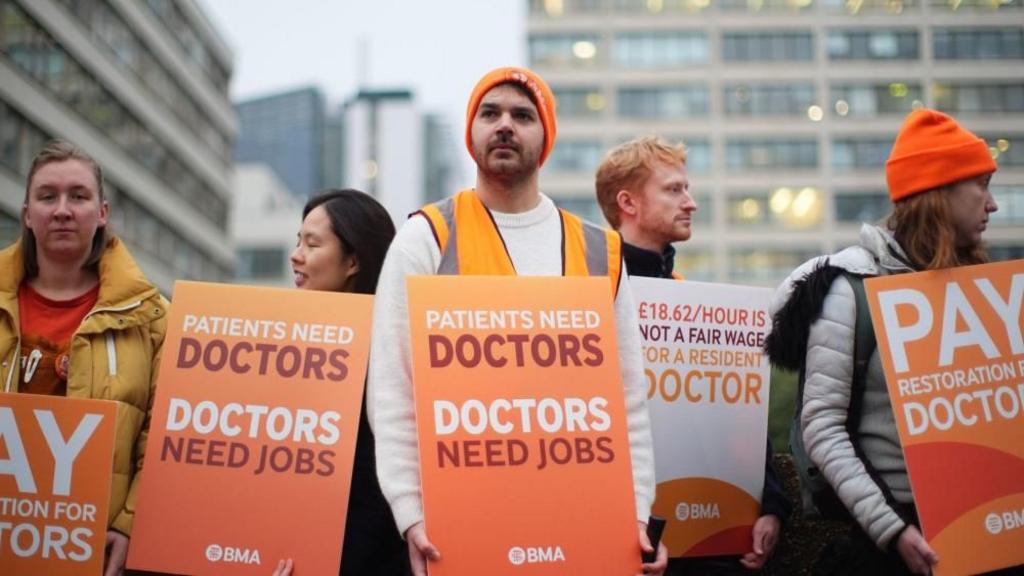
A potential strike by resident doctors in England next week could be averted following a new offer from government ministers to the British Medical Association (BMA).
The doctors’ union has agreed to present the offer to its members in the coming days. If supported, the planned five-day walkout, scheduled to begin on Wednesday, December 17th, may be called off.
The proposal includes a rapid increase in specialist training positions and coverage of out-of-pocket expenses, such as exam fees.
However, the offer does not include any commitments to additional pay. Health Secretary Wes Streeting has maintained his stance against negotiating on pay, citing the nearly 30% pay increases resident doctors – formerly known as junior doctors – have received over the past three years.
The deal also entails the introduction of emergency legislation enabling the NHS to prioritize doctors who have studied and worked in the UK for specialist training positions, which resident doctors typically transition into in their third year of training.
This year, there was intense competition for these roles, with 30,000 applicants vying for 10,000 positions. This figure included doctors from abroad who, under current regulations, are assessed on the same basis as UK-trained doctors.
The number of specialty posts is also set to increase by 4,000 by 2028, with the initial 1,000 posts becoming available next year. The government had previously pledged an increase of 2,000 posts.
The BMA will now consult its resident doctor members to determine whether this offer is sufficient to cancel next week’s strike. An online survey of members will be conducted, closing on Monday, December 15th, just two days before the strike is scheduled to commence.
This development has drawn criticism from Mr. Streeting, who had urged the union to call off next week’s industrial action.
Ministers are concerned that hospitals will have already been compelled to cancel a significant number of treatments by Monday as part of their preparations for the strike.
Mr. Streeting stated he had offered the BMA the opportunity to extend its mandate, which expires in the first week of January, allowing them to still stage a five-day strike if members ultimately reject the deal.
Mr. Streeting expressed his “astoundment” that the BMA had not accepted this offer, given the current pressures on hospitals from flu and other winter-related ailments, adding that “the spectre of strikes next week still looms.”
“I cannot understand the wilful casualness with which the BMA’s leadership have chosen to inflict this pain on patients, other staff and the NHS itself,” he asserted.
“It is one of the most shameful episodes in the long history of the BMA.”
He added: “The NHS leaders are going to have to start cancelling other doctors’ leave now to cover potential strikes, and patients will also experience unnecessary and avoidable disruption through some cancelled appointments and operations. That’s on the BMA.”
Regarding the offer, he said: “Doctors asked me to deliver on jobs, especially unfair competition from overseas, and this comprehensive offer will deliver.”
BMA resident doctors committee chairman, Dr. Jack Fletcher, stated: “This offer is the result of thousands of resident doctors showing that they are prepared to stand up for their profession and its future.
“It should not have taken strike action, but make no mistake: it was strike action that got us this far.
“We have forced the government to recognise the scale of the problems and to respond with measures on training numbers and prioritisation.
“However, this offer does nothing to restore pay for doctors, which remains well within the government’s power to do.”
Mr. Streeting later said in the Commons that he would retract the government’s offer if the BMA rejected it, so as not to “incentivise” further strikes.
Shadow Health Secretary Stuart Andrew described the strike as “unacceptable” and welcomed the government’s offer.
However, he stated that the Conservatives had warned that providing “inflation-busting pay rises without any conditions at all” meant unions would “come back for more”.
“If they reject this, what’s going to happen? I’m not sure government is ready for this winter.”
The BMA argues that despite the pay rises of the last few years, pay is still a fifth lower than it was in 2008 once inflation is taken into account.
If members indicate in the online survey the offer is enough to call off next week’s strikes, a formal referendum of resident doctors would follow. This would give members time to consider the details of the offer and whether to accept it and end the current dispute, the BMA said.
If the survey of members decides it is not enough to call off strikes, they will go ahead as planned next week, the union added.
Sara Ali also says she is seeing an increase in people purchasing over the counter medicine.
Masks will be provided at hospital entrances and only those able to wear them will have to.
A man who had oral cancer is promoting free screening for people who can’t find an NHS practice.
Aari Patel died in 2016, aged three, and his donated organs have helped save the lives of other children.
About 2,000 chemotherapy doses will be produced there each month along with other medications.