

“`html
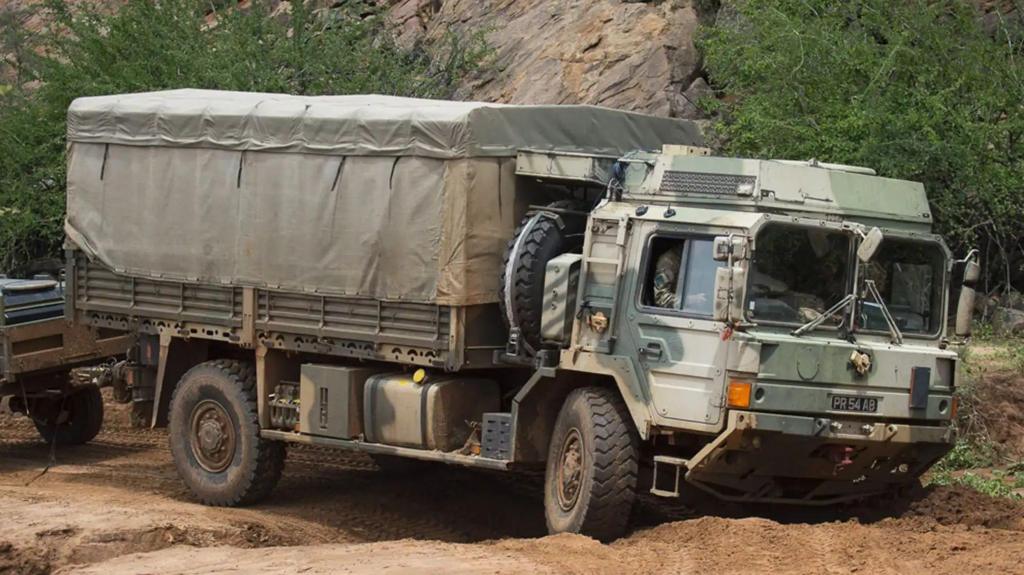
Remedial work is underway to address safety concerns affecting 6,000 British Army support vehicles that have been temporarily withdrawn from service, a defence minister has informed parliamentarians.
Luke Pollard stated that the grounding of the Army’s entire support lorry fleet for necessary repairs, initially reported by The Times, demonstrated the “system working properly”.
“An issue was identified, a rectification was instructed, and that is currently in progress,” he told the Commons defence committee.
He reassured MPs that “we have maintained forces at a degree of readiness,” following concerns raised by Labour’s Derek Twigg regarding potential emergency scenarios requiring the truck fleet.
The MAN Logistic Support Vehicle, considered the “workhorse” of the British Army, is crucial for delivering essential supplies such as food, fuel, and equipment to troops.
The decision to withdraw the fleet followed a recent exercise, “Titan Storm,” conducted on Salisbury Plain, Wiltshire. Faults were detected in the propshaft, responsible for transmitting power to the wheels, in several vehicles.
All 6,000 vehicles, some of which have been in operation for nearly two decades, are undergoing retrofitting with replacement parts. The action follows the discovery that some components were incorrectly installed, leading to damage, according to BFBS Forces News.
Pollard explained to MPs: “It’s fairly standard practice, across our military platforms, for safety notices to be issued and for rectification work to be undertaken.”
He further added: “Given the platforms we utilize, their age, and the extent of their use, regular updates are necessary.”
Pollard also addressed questions from MPs regarding a separate incident during Exercise Titan Storm, which led to the suspension of the Army’s Ajax armoured fighting vehicles.
Approximately 30 soldiers participating in training with the Ajax vehicles reported feeling unwell due to excessive noise and vibration, with some observed experiencing vomiting after exiting the vehicles.
Pollard informed the committee that “none of them required hospitalisation” and “many have since returned to their regular duties”.
However, he emphasized: “I have consistently maintained that the safety of our personnel is paramount, which is why we have temporarily paused operations.”
These events follow Pollard’s statement weeks prior, asserting that the significantly delayed £6.3 billion Ajax programme had “overcome its challenges” and was ready for deployment in operational squadrons.
Pollard clarified that his statement was based on written confirmation from the chief of the general staff and the national armaments director, assuring that Ajax was “demonstrably safe to operate”.
He reported that the Army had initiated an investigation into the issues encountered with the Ajax vehicles during Exercise Titan Storm, with findings expected “very shortly”.
Pollard also informed MPs that the Defence Accident Investigation Branch had launched its own investigation, which would require more time to complete.
In addition, he has commissioned an independent review of the assurances he received from officials regarding the vehicles’ safety.
When asked if he had been misled concerning the operational readiness of the vehicles, he responded: “Until I have reviewed the findings of the preliminary report into what occurred, I am hesitant to make a judgment on the processes that led to it.”
The UK government previously stated they were ready for deployment with interest from Nato allies.
Robert James Purkiss is facing extradition to Kenya in connection with the death of a young mother.
The SAS Regimental Association is threatening legal action if the bill is enacted in its current state.
The smartphone-based technology is tested in the jungles of Belize and will be introduced in 2026.
A highly critical report says the UK does not have the resources it needs to deal with complex military threats.
“`