

“`html
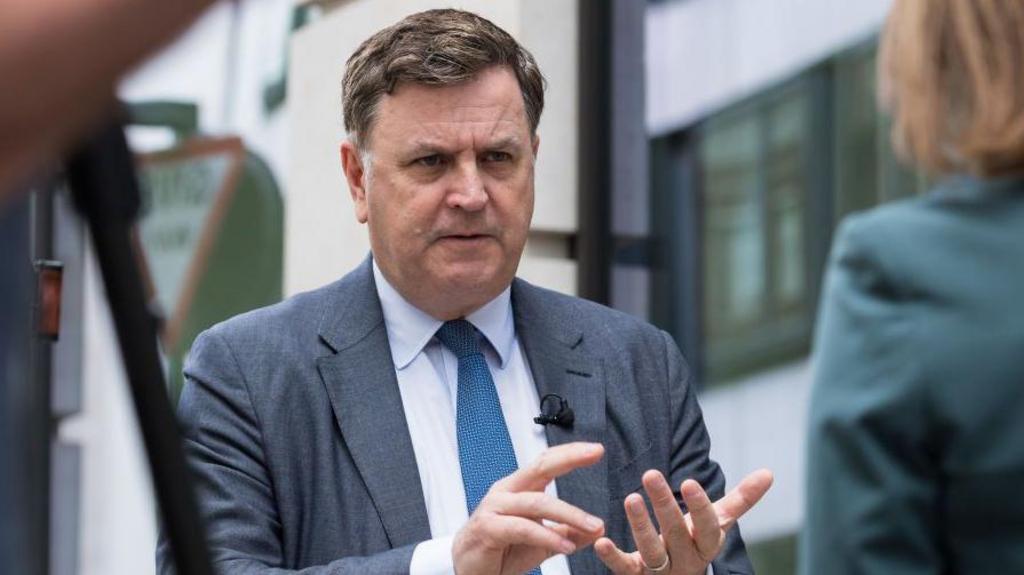
Shadow Chancellor Mel Stride has called upon the UK’s Financial Conduct Authority (FCA) to investigate “possible market abuse” allegedly perpetrated by individuals within the Treasury and Downing Street in the lead-up to the Budget announcement.
This request follows accusations that Chancellor Rachel Reeves misled the public regarding the nation’s financial standing. Claims suggest Reeves and her officials were aware of a more favorable economic outlook than publicly communicated, prompting criticisms from the Conservative party who deemed her briefings overly pessimistic.
The Conservatives have urged Reeves’s resignation, with Stride formally requesting the FCA to examine potential market manipulation through an official letter.
In Stride’s opinion, “Confidential market-sensitive information appears to have been spun, leaked, and misused – and markets, businesses, and families have paid the price.”
The FCA, the regulatory body for financial services firms in the UK, is mandated to handle and investigate reports of market abuse, including activities such as insider dealing and market manipulation.
Stride’s letter to the regulatory head details briefings made before the Budget, concerning the overall financial picture, economic forecasts, and speculation regarding potential tax increases.
Stride stated, “It seems increasingly clear that the chancellor has been giving an inaccurate picture of the economic and fiscal context, and this appears to be driven by political considerations.”
He further alleged that “leaks and spin” originating from the Treasury had resulted in “rife” market speculation and increased volatility within the gilt markets.
The FCA has confirmed receipt of Stride’s letter, and the BBC understands a response will be issued in due course.
Financial market reactions have been closely scrutinized both before and after the Budget, given the significant impact that tax and spending policies can have on UK borrowing costs.
Governments often issue bonds – essentially IOUs – to fund public spending, paying interest to investors in return.
The credibility afforded to a chancellor’s management of finances by the markets directly affects the cost incurred by governments to secure loans.
Following Reeves’s Budget announcement, the cost of government borrowing experienced a slight decrease, indicating a degree of confidence in the proposed policies.
Reeves’s Budget included a range of tax increases, along with an extension of the three-year freeze on tax thresholds and higher income tax rates, thereby increasing the tax burden for millions of individuals. She also abolished the two-child benefit cap.
However, Reeves has faced criticism over alleged misrepresentation of the public finances in the run-up to the Budget.
Reeves repeatedly referenced a projected downgrade in UK economic productivity, suggesting it would hinder her ability to meet borrowing targets. This fueled speculation about potential increases in income tax rates, potentially violating a manifesto pledge.
In a rare pre-Budget address on November 4, Reeves warned that the UK’s productivity was weaker “than previously thought,” which would have “consequences for the public finances too, in lower tax receipts.”
Subsequently, on November 10, Reeves told the BBC that adhering to manifesto commitments would “require things like deep cuts in capital spending.”
Conversely, it has emerged that the Office for Budget Responsibility (OBR) informed the Treasury on October 31 that it was on track to meet its main borrowing rule by £4.2bn. This figure, however, was less than the £9.9bn buffer Reeves had allocated the previous year.
In a letter to the Commons Treasury Select Committee, OBR Chairman Richard Hughes also disclosed that he had communicated to the Chancellor on September 17 that public finances were in a healthier state than generally perceived.
Alongside the Conservatives, the SNP has also appealed to the FCA, urging an investigation into claims of “deliberately false and misleading” briefings.
Reports leading up to the Budget had indicated that the Chancellor potentially faced a £20bn shortfall in meeting tax and spending targets due to the OBR’s productivity downgrade.
Conservative leader Kemi Badenoch has called for Reeves’s resignation.
She asserted, “The Chancellor called an emergency press conference telling everyone about how terrible the state of the finances were, and now we have seen that the OBR had told her the complete opposite.”
“She was raising taxes to pay for welfare.”
The Tories have formally requested the Prime Minister to summon Reeves before MPs on Monday to provide clarification regarding her conduct surrounding the Budget and the period leading up to it.
Reeves defended herself against critics on Sunday with Laura Kuenssberg, arguing that the £4.2bn headroom was not “an extra 4bn to play with” but a decrease from the £9.9bn buffer of the previous year.
She stated, “I clearly could not deliver a budget with just £4.2bn of headroom,” as it would have been “the lowest surplus any chancellor ever delivered,” and she would “rightly” have faced criticism for insufficient headroom.
She added, “I was clear that I wanted to build up that resilience and that is why I took those decisions to get that headroom up to £21.7bn.”
Three days in, after a tax U-turn and partial climbdown on workers’ rights, Laura Kuenssberg looks at what impact Budget week might have.
Some people say the budget should have “done more” for small businesses.
Average disposable income is set to grow by “only” 0.5% annually over the next five years, the think tank says.
Keir Starmer has always said he wanted to end the benefit cap but the money was not available – until now.
Businesses in Surrey give mixed reactions to Chancellor Rachel Reeves’ Budget.
“`