

“`html
Senegal’s Prime Minister and Nigeria’s former President have both expressed skepticism regarding the recent ousting of Guinea-Bissau’s President by the country’s military, suggesting it may not have been a genuine coup.
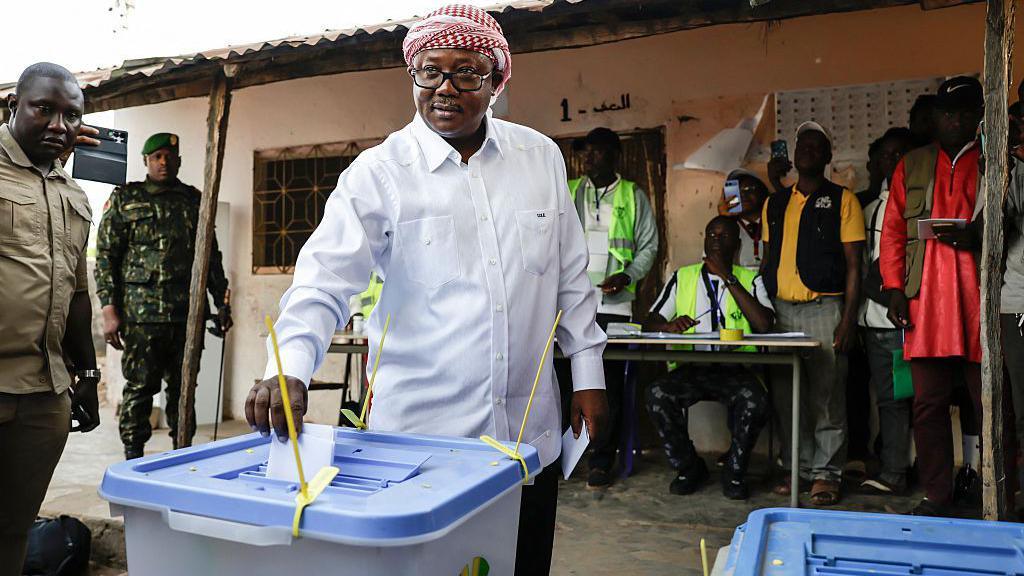
The apparent removal of former President Umaro Sissoco Embaló occurred just a day before authorities were scheduled to announce the results of the presidential election.
Since then, the military has suspended the electoral process, blocked the release of the results, and maintained that it thwarted a plot to destabilize the politically unstable nation.
Senegal’s Prime Minister, Ousmane Sonko, and Nigeria’s former leader, Goodluck Jonathan, have called for the release of the presidential election results, while also suggesting the coup was fabricated, though they have not provided concrete evidence to support these claims.
Following his release by the military forces that overthrew his government, the former President arrived in neighboring Senegal on a chartered military flight late Thursday.
Former Nigerian President Jonathan, who led a team of election observers from the West African Elders Forum to Guinea-Bissau, stated that the incident “was not a coup.”
He characterized it as a “ceremonial coup,” questioning the events leading up to Wednesday’s announcement of a power grab by the military.
Specifically, he questioned why President Embaló was the first to announce his own overthrow, drawing comparisons to how other leaders in the region were ousted in recent coups.
Embaló reportedly contacted French TV station France 24, stating, “I have been deposed.”
Meanwhile, Senegal’s Sonko informed lawmakers that “what happened in Guinea-Bissau was a sham.”
The statements from both leaders bolster claims by the opposition that the coup was staged, although no concrete evidence has been presented to substantiate these claims.
Embaló has not yet commented on these allegations.
On Friday, Guinea-Bissau’s transitional leader, Gen Horta N’Tam, appointed Ilidio Vieira Té, formerly the finance minister, as the new prime minister.
Furthermore, the African Union suspended Guinea-Bissau on Friday following the unconstitutional military takeover, according to AFP reports.
The West African bloc Ecowas has also taken similar action, while urging the military to return to their barracks.
Guinea-Bissau is a West African nation prone to coups and grappling with the challenges of drug trafficking.
The military has stated that their power seizure was intended to thwart a plot by unnamed politicians with “the support of a well-known drug baron” to destabilize the country.
A mother of three told the BBC that while it was not the first military takeover she had experienced, it was unexpected, as people were awaiting the election results, which saw a voter turnout of over 65%.
“We heard gunfire. We ran away. We tried to pack our bags to go home,” she said.
Another resident of the capital, Bissau, expressed discontent with the situation.
“This doesn’t help anyone. Because it puts the country into chaos,” Mohamed Sylla told the BBC.
However, reactions have been mixed, with some residents expressing support for the army and hoping for an orderly transition.
“I am not against the military regime as long as they improve the living conditions in the country,” Suncar Gassama told the BBC.
Zambia’s government is accused of ‘hypocrisy’ as fallout from ex-president’s death deepens.
The defendants were accused of attempting a coup – but human rights groups say the trial was politically motivated.
Her resignation comes as a South African allegedly recruited to fight in Ukraine recounts the horrors of war to the BBC.
The country faces many deadly security challenges, leaving the army and police severely overstretched.
The US boycotted the G20 summit in Johannesburg over widely discredited claims of persecution of the white minority.
“`