

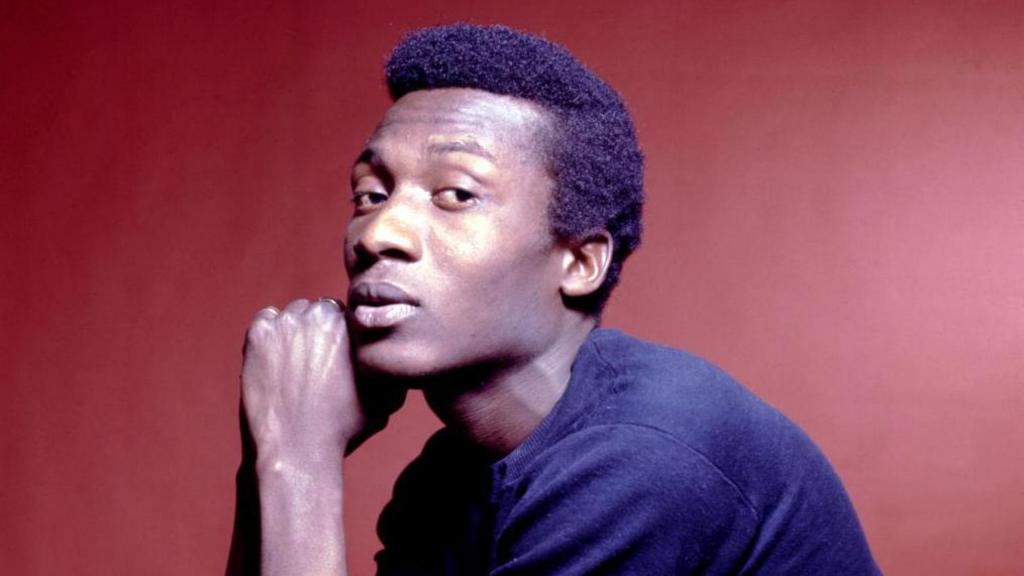
Jimmy Cliff, a towering figure and influential pioneer of reggae music, has died at the age of 81.
Rising to prominence in the 1960s, Cliff played a pivotal role in popularizing Jamaican music globally with hits such as “Wonderful World, Beautiful People” and “You Can Get It If You Really Want.”
His starring role as a rebellious protagonist in the 1972 crime drama “The Harder They Come” remains a landmark of Jamaican cinema and is widely credited with introducing reggae to American audiences.
The musician’s passing was announced in a statement on Instagram by his wife, Latifa Chambers.
“It’s with profound sadness that I share that my husband, Jimmy Cliff, has crossed over due to a seizure followed by pneumonia,” she wrote.
“I am thankful for his family, friends, fellow artists and coworkers who have shared his journey with him.
“To all his fans around the world, please know that your support was his strength throughout his whole career.
“Jimmy, my darling, may you rest in peace. I will follow your wishes.”
The message was also signed by their children, Lilty and Aken.
Born James Chambers in 1944, Cliff spent his early years in St. James, Jamaica, growing up in a large family facing conditions of poverty.
Endowed with a distinctive voice, he began singing in his local church at the age of six.
Inspired by ska pioneer Derrick Morgan, he began writing his own songs, seeking guidance from his woodwork teacher.
“He told me, ‘You just write it!’“ he told Mojo magazine.
”So I went ahead and… wrote a song called I Need A Fiancée, another called Sob Sob and I made a guitar out of bamboo to accompany myself.”
By 14, he had relocated to Kingston and adopted the name Cliff, signifying his aspirations.
After recording several singles, he topped the Jamaican charts with his self-penned “Hurricane Hattie.”
In 1965, he moved to London and signed with Island Records, later home to Bob Marley; initial efforts to adapt his sound for rock audiences met with limited success.
His breakthrough came in 1969 with “Wonderful World, Beautiful People,” an optimistic anthem, and the politically infused “Vietnam,” lauded by Bob Dylan as “the best protest song ever written.”
The song portrays a young soldier writing home from war, promising his mother’s imminent return, only for her to receive a telegram announcing his death.
Reflecting on “Vietnam” in 1986, Cliff noted: “The essence of my music is struggle. What gives it the icing is the hope of love.”
The film “The Harder They Come,” expressly made for the movie, propelled him to international stardom. In the film, he portrayed Ivan Martin, a young man navigating Jamaica’s corrupt music industry.
“The film opened the door for Jamaica,” Cliff recalled. “It said, ‘This is where this music comes from.'”
Cliff wrote four songs for the soundtrack, including “Many Rivers To Cross,” which mirrored his early challenges in the UK.
“I was still in my teens,” he said. “I came full of vigour: I’m going to make it, I’m going to be up there with the Beatles and the Stones.”
“And it wasn’t really going like that, I was touring clubs, not breaking through. I was struggling, with work, life, my identity. I couldn’t find my place. Frustration fuelled the song.”
The film and its soundtrack garnered international acclaim, with Rolling Stone magazine listing the album among its top 500 albums of all time.
In the 1980s, he collaborated with the Rolling Stones on “Dirty Work,” and in 1993, he re-entered the US charts with his cover of “I Can See Clearly Now” from the soundtrack of “Cool Runnings,” a film about Jamaica’s bobsled team.
His recordings also include the Grammy-winning albums “Cliff Hanger” (1985) and “Rebirth” (2012), a return to his earlier style.
Cliff was inducted into the Rock and Roll Hall of Fame in 2010, describing it as “a great thrill and an honour.”
Fugees star Wyclef Jean, who inducted him, spoke of Cliff’s profound impact on him as a youth in Haiti.
“When we saw Jimmy Cliff, we saw ourselves,” he said.
Cliff continued touring throughout his life, performing in Glastonbury’s legends slot in 2003 and gaining a new generation of fans at the 2010 Coachella Festival.
His contributions to Jamaican music and culture were recognized in October 2003 when he received the prestigious Order of Merit.
However, Cliff emphasized that his connection with fans surpassed any of the accolades he received.
Speaking to NPR in 2012, he said: “When someone comes up to me and says, ‘I was a dropout in school and I heard your song You Can Get It If You Really Want, and that song made me go back to school, and now I am a teacher and I use your song with my students’ – that, for me, is a big success.”